
2027 Scout Camper...
Oct 06, 2026

If you’ve spent any time in overlanding forums, you’ve probably seen people get way too passionate about air heaters. Diesel vs. propane. Dry vs. wet heat. And then someone inevitably jumps in yelling about moisture, fuel contamination, or how you’re “doing it wrong.”
So let’s clear the air (pun intended). Whether you’re building a mobile ski lodge on wheels or chasing desert sunsets, the heater you choose makes or breaks your cold-weather setup. Below, we’re breaking down every major truck camper air heater type, how each fuel source works, and which one is actually worth your time.

This is one of those topics that refuses to die online, even though it’s been outdated for decades. The short version: modern sealed and vented combustion heaters don’t make your air “wet.”
Older propane heaters did. Back then, the combustion process wasn’t sealed off from the living space. When propane (C₃H₈) burns, it combines with oxygen and produces carbon dioxide and water vapor. If that water vapor has nowhere to go, it condenses on cold surfaces and makes everything feel damp.
Modern systems like Propex and Truma isolate combustion from cabin air completely. The heater pulls in outside air for combustion, vents the exhaust (including water vapor) outside, and transfers heat through a metal exchanger. The warm air inside your camper never mixes with those exhaust gases.
So if someone online tells you propane heaters create “wet heat,” tell them they’re about 30 years late to the conversation.
Now that we’ve settled that, let’s talk about how to choose the right air heater for your truck camper. Your ideal setup depends on how you camp, what fuels you already carry, and where you’re going.
Here are a few things to keep in mind:
Fuel convenience: If you already use propane for cooking, sticking with a propane heater makes life simpler.
Vehicle integration: Diesel or gas heaters can pull fuel straight from your truck’s tank, but that can be expensive to install, risky if not done correctly, and might void your vehicle warranty.
Fuel availability: Diesel is easy to find almost anywhere, but in some regions, fuel quality can be questionable. Propane is common in North America but harder to source internationally.
Elevation and cold weather: Some heater types struggle at altitude or in extreme cold. While diesel and propane generally perform great in both of these categories, diesel tends to be our suggestion for extreme cold (with appropriate fuel additive) and propane is our suggestion for extreme altitude, as it will require less maintence.
Recirculating vs. non-recirculating: Recirculating heaters reuse interior air for faster warm-up times. Non-recirculating units pull in fresh air each cycle.
Heater sizing: A good rule of thumb is about 9.3 BTUs per square foot of camper space.

There are five main types of air heaters used in truck campers: diesel, propane, gasoline, electric, and wood/pellet. Each has its own strengths and weaknesses depending on how and where you travel.
Example brands: Webasto, Espar
Pros:
Energy-dense fuel for long run times
Dry heat and strong cold-weather performance
Diesel is stable and safe to store
Cons:
Requires its own tank if you have a gas vehicle
Needs periodic maintenance; fuel treatment in cold temps
Cheap suitcase-style units can be unreliable
Our take:
Diesel air heaters are the go-to for serious cold-weather truck campers and expedition rigs. They sip fuel and burn efficiently (if you buy a quality brand). They will require additional care at altitude but can be easily achieved through proper use. Just know that they’re designed to run best at medium to high output. Running them at low power for too long can cause carbon buildup, so choose the smallest size that meets your needs.
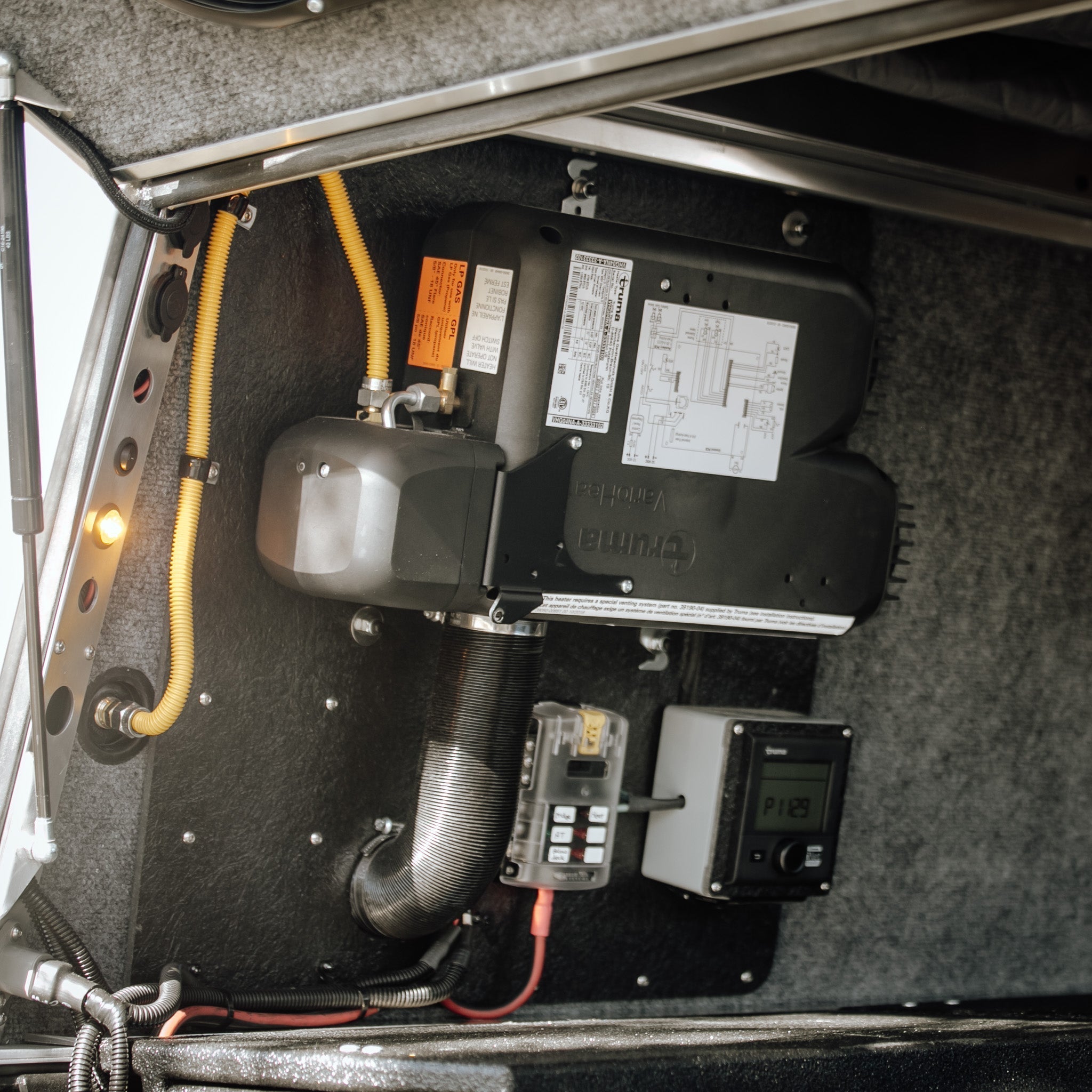
Example brands: Propex, Truma
Pros:
Reliable, low-maintenance, and clean-burning
Fuel doubles for cooking and campfire pits
Maintains steady temperature control for long periods
Cons:
Old catalytic heaters do create moisture
Propane can be harder to source in remote areas
Regulators and lines can freeze below 10°F
Our take:
If you’re camping in North America, propane heaters are the best all-around choice for most truck campers due to their lack of maintenance. Systems like the Propex HS2000 or Truma VarioHeat are compact, efficient, and safe. Just make sure your propane system is installed correctly, and you’ll enjoy quiet, reliable heat for years.
Example brands: Espar, Webasto
Pros:
Uses the same fuel as your vehicle
Useful for international travelers with gas-powered rigs
Cons:
Less reliable over time
Poor performance at high elevation
Gasoline is more flammable than diesel or propane
Our take:
We rarely recommend gas heaters unless you’re traveling internationally with a gas vehicle and can’t easily find propane or diesel. They work, but reliability and safety can both be concerns.
Pros:
No combustion or exhaust gases
Quiet and maintenance-free
Cons:
Requires a large power system
Can quickly drain your batteries
Our take:
Electric heaters are best as supplemental heat for small, well-insulated campers with serious power systems. They’re great for shore power setups or quick use, but not for sustained off-grid heating.
Example brands: Dickinson, Cubic Mini
Pros:
Natural, renewable fuel source
Creates a cozy, cabin-like atmosphere
Cons:
Hard to control temperature
Can produce smoke and sparks inside
May void insurance coverage or violate campground rules
Our take:
Wood stoves look amazing and feel nostalgic, but they’re better for aesthetic builds than practical heating. They’re fun, but also smoky, unpredictable, and sometimes unsafe in small spaces.

| Fuel Type | Max Elevation (avg) | Efficiency | Maintenance | Availability | Best Use Case |
|---|---|---|---|---|---|
| Diesel | ~13,000 ft* | Excellent | Moderate | High (globally) | Cold-weather, long-term travel |
| Propane | ~14,000+ ft* | Good | Low | Easy in North America | Everyday camper setups, extreme elevation |
| Gasoline | ~7,000 ft* | Fair | High | Excellent | International gas vehicles |
| Electric | N/A | Poor (energy-intensive) | None | Depends on power | Supplemental heat, shore power |
| Wood/Pellet | N/A | Variable | High | Regional | Off-grid aesthetic builds |
* Max elevation values are approximate and can vary based on factors like fuel quality, heater tuning, maintenance, and environmental conditions. Use these numbers as general performance guidelines rather than absolute limits.
There’s no “best” heater — only what’s best for you. A diesel heater is unbeatable for Arctic conditions, but propane is the all-around winner for most truck campers in North America.
Whatever you choose, don’t undersize your heater. It’s better to have more output and let it idle occasionally than to max out a smaller unit constantly. And if you want to heat both your air and your water, look into efficient and tidy combo systems.
Oh, and one last thing: if you hear someone say their propane heater makes their camper “humid,” just smile and walk away. You’ve got science on your side now.


Oct 06, 2026

Jul 29, 2026

Jul 10, 2026
Get tips on overland travel and rig setup, exclusive deals on campers and gear, early access to events and product launches, and customer adventure stories.
1 comment
Mario Donovan
Well done article!