2027 Scout Camper...
Oct 06, 2026

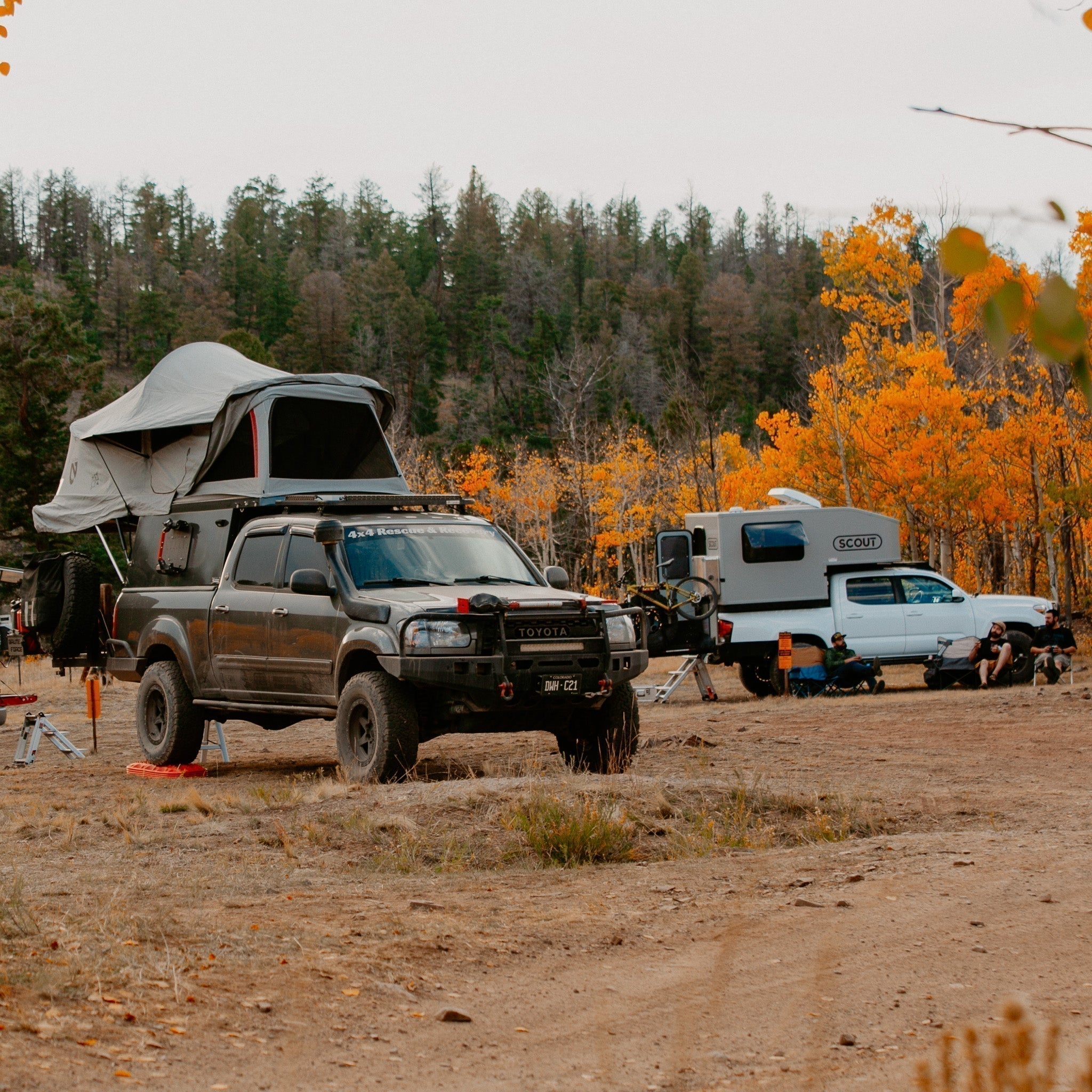
Deciding how to build out your truck for adventure can feel like falling into a rabbit hole of options. Between all the terms, pop-top, hard-sided, shell, it’s easy to hit decision paralysis. For many people standing at the start of their overland journey, the big fork in the road comes down to two main paths: slide-in campers and topper style campers. Both are capable. Both can be transformed into excellent home bases. But they each come with their own set of pros, cons, and design philosophies.

At Juniper Overland, we help customers navigate this decision every day. Some want full-time, off-grid comfort and the ability to live out of their vehicle year-round. Others just need a flexible shell that works for weekend trips with bikes or snowboards and maybe evolves into more over time. No two builds are the same, and the good news is, there’s no single “right” answer. What matters is finding the camper that fits your lifestyle and adventure goals.
We often talk about the “buy once, cry once” mentality, not because we think you should throw money at a build, but because we’ve seen what happens when people don’t spend it wisely. A number of our customers come to us on their second, third, even fourth attempt at building their perfect setup. They’ve tried the budget-friendly options, pieced together systems from forums and YouTube, or bought something off-the-shelf that wasn’t quite right. And while there’s nothing wrong with learning through trial and error, it often leads to wasted time, sunk costs, and setups that still don’t fully deliver. Our goal is to help you skip some of that pain and get it right the first time, or at least close enough that the next steps are upgrades, not do-overs. When you invest in a well-built platform tailored to your actual needs, it lasts longer, performs better, and saves you from constantly chasing the next fix. It’s not about spending more, it’s about spending smarter.

This article is here to break it all down. We’ll walk you through the key differences between slide-in and topper campers, explore how they fit different styles of travel, and explain how Juniper can help customize either option based on your needs. We'll also cover typical upgrade paths, budget ranges, real-world use cases from customers (including full-time living), and how to think about your build as something that can evolve with you. Whether you're looking for a minimalist shell or a four-season off-grid rig, you're in the right place.
If you’ve been stuck comparing specs, bouncing between forums, or standing in your driveway wondering how much camper your truck can actually handle, keep reading. You’ll come away with a clearer understanding of what each setup offers and what you really need to start chasing the life you want out there.

A slide-in camper is a fully enclosed living unit designed to fit directly into the bed of your truck. Once installed, it effectively transforms your pickup into a compact, self-contained RV complete with sleeping quarters, storage, and often water and power systems. Slide-ins are secured to the truck bed using ratchet straps, turnbuckles, or mounting plates, making them a breeze to remove and get your truck bed back for easy city driving, errands to your local home improvement store, or picking up that steal on Facebook Marketplace. They're popular among overlanders, skiiers/snowboarders, mountain bikers, climbers, hunters, remote workers, and long-term travelers who prioritize comfort, insulation, and all-season readiness.
Juniper Overland offers a curated lineup of slide-in campers including Scout Campers, the Alu-Cab Khaya, and the AT Overland Aterra Slide-In. Each model brings something different to the table, but all provide a rigid, insulated structure that makes life on the road feel less like camping and more like home.
Slide-ins are often built with the intention of being ready to go right out of the box, or at least close to it. Unlike shell-style toppers that start as a blank slate, most slide-ins include built-in furniture, storage, and a designated sleeping area. Depending on the model, many also come with water tanks, plumbing for a sink or shower, integrated heating, lighting, solar, and even space for a portable toilet or fridge. For someone planning to live out of their rig full-time or take extended backcountry trips, a slide-in provides the structure and reliability needed for that level of adventure.

Where slide-in campers really stand out is their ability to be removed relatively quickly, usually in a matter of minutes with the right setup. This gives you the flexibility to return your truck to a standard bed when needed. Whether you’re hauling lumber for a home project, loading up mountain bikes for a day ride, or just running errands without the added weight and height of a full camper, having the ability to remove the camper quickly makes your truck more versatile year-round. It's a practical feature that adds value beyond the backcountry and something to consider if your rig also doubles as your daily driver.
Slide-in camper also support high-demand electrical and water systems. Because the camper is fully enclosed and often has designated compartments for batteries, inverters, or heaters, there’s room to install more robust systems that make extended off-grid living realistic. At Juniper, many of the slide-ins we outfit are running lithium battery banks upwards of 200 or 300 amp hours, paired with DC-to-DC chargers and solar panels that support everything from Starlink internet and induction cooking to espresso machines, diesel heaters, and LED lighting systems. For customers working remotely or traveling full-time, this level of power independence is essential. Not to say that a topper style camper couldn’t support a large power system or many gallons of water, but the storage and power/water system often built into a slide-in make for upgrading easily.

Another major benefit of slide-in campers is their ability to handle cold (or hot) climates. Many models, like the Aterra or entire line up of Hardwall Scout Campers, come with four-season insulation, optional heating or air conditioning, and a sealed interior that retains it’s temperature in all environments. For customers based in Colorado or anywhere in the Mountain West, this level of protection against the cold isn’t a luxury, it’s a necessity. We regularly install diesel or propane heaters and hot water systems in slide-in builds for exactly this reason: it lets you extend your season into late fall, winter, or even live comfortably through the colder months if you’re full-timing (or using it as a ski in, ski out mountain cabin).
Comfort upgrades are another area where slide-in campers shine. Because of their structural rigidity and dedicated interior space, we’re able to add features like pressurized water, interior or exterior showers, on-demand hot water, and efficient storage systems that integrate into the existing layout. For customers with specific needs like families, remote workers, or long-distance travelers, these add-ons make the camper feel more like a proper home than a purpose-built tent on wheels.
We often recommend that customers think carefully about which features to order from the factory and which can be added later. Some upgrades, such as additional windows or roof top tents, are easier to install during the manufacturing process. Others, like power systems, water heating, or awnings, can be done at Juniper as your needs evolve. It's common for customers to start with a factory build that covers the essentials, take a few trips to figure out what’s missing, and then return for round two of upgrades that fine-tune the camper for their lifestyle.

A great example of this approach is a customer we worked with who now lives full-time in a Scout Camper. He started with a lightly factory-upgraded model and used it for a few months before realizing he needed more electrical capacity for remote work, more comfort for winter travel, and additional storage to make it more like home. We ended up installing a full Victron-based power system, a diesel heater, a hot water shower, and a custom storage solution. Today, he’s able to live and work from his camper year-round and his setup reflects a build that grew with him instead of trying to predict everything from day one.
For the adventurer who wants comfort, year-round usability, and the ability to live out of their truck for extended periods, a slide-in camper is often the right choice. It’s a larger investment up front (most slide-ins range from the high $20,000s to $50,000 depending on options) but it comes with a level of readiness and capability that justifies the cost for those who are serious about life on the road.

A topper style camper, sometimes referred to as a canopy camper or camper shell, is a modular structure that mounts to the bed rails of a pickup truck, creating an enclosed space that can be customized for camping, hauling, or a mix of both. Unlike a slide-in camper, a topper does not occupy the full bed of the truck; instead, it caps the bed and leaves the floor open, allowing for flexible use of space beneath. At its core, it’s a blank canvas, one that can be built out slowly over time or outfitted up front as a turnkey adventure platform.
At Juniper Overland, we specialize in outfitting toppers from brands like AT Overland, including the Atlas, Habitat, and Summit models, as well as the Alu-Cab ModCap. Each of these campers offers something different, but they all share one critical approach: lightweight, modular design that balances simplicity with capability. Whether you’re planning a minimalist weekend setup or building a highly organized rig for long-range trips, topper campers offer the kind of flexibility that appeals to both DIY tinkerers and customers who want a fully built setup without the weight and cost of a slide-in.

Topper campers typically feature a pop-up roof, giving users standing room when deployed while maintaining a low profile and low center of gravity when stowed. This is a huge advantage for adventurers who navigate rough trails, drive in tree-dense areas, or want to keep their rig garage-friendly (though this will still require a taller-than-standard garage door height). The pop-top design also improves fuel efficiency compared to full-height slide-in campers, which is a meaningful benefit if you’re crushing a lot of highway miles getting to your destination.
Where topper campers really shine is in their versatility. Most start as bare aluminum or composite shells, meaning there’s no fixed layout inside, just empty space waiting to be tailored to your needs. For customers who want to build out their system over time or need something specific for gear-hauling like bikes, skis, camera equipment, or hunting gear, this freedom is a huge advantage. You can add cabinetry, drawers, fridge slides, auxiliary batteries, water systems, and extra sleeping platforms in phases, based on real-world use. You don’t have to guess what you’ll need upfront and find out you never use something as much as you thought you would.
Many of our customers start with just the camper shell and a simple power system, then return after a season or two to add upgrades like additional power, hot water, or heating. We see this a lot in Colorado, where early trips might be summer-only and focused on mountain biking or climbing. But as the adventures start creeping into fall and early spring, or as families grow and needs change, people come back to expand their setup. The topper platform supports that kind of evolution. It's modular by nature, which means it scales with your lifestyle.

That said, while toppers are often associated with DIY builds, many customers come to Juniper wanting a turnkey solution. They’ve got a vision and a deadline, like a trip to Alaska or sipping margaritas in Baja, so they want a professional-grade setup from the start. That’s where we really shine. Our team works closely with each customer to plan a tailored interior build-out based on their priorities. Maybe that’s dual lithium batteries and a solar array for off-grid charging. Maybe it’s a hot water system with an exterior shower and a heater for cold mornings in the Rockies. Or maybe it’s maximizing storage for gear-intensive trips, with cabinets, drawers, and MOLLE panels. The beauty of a topper camper is that it supports all of these directions without forcing you to choose a rigid, pre-defined layout.
From a performance standpoint, toppers are also significantly lighter than slide-in campers. That’s not just a spec sheet detail, it has real-world implications. Less weight means better fuel economy, improved handling on rough roads, and reduced wear and tear on your suspension and tires. This is especially relevant for mid-size trucks like the Tacoma or Gladiator, which can struggle under the weight of a fully loaded slide-in. With a topper, you can retain more of your truck’s original drivability while still gaining an enclosed, elevated shelter for sleeping and gear storage.
Cost is another area where topper campers offer an advantage. Most of the toppers we install start around $15,000 and scale up depending on the brand, model, and customization level. For budget-conscious adventurers, this lower barrier to entry makes it easier to get into the world of truck campers without committing to a full slide-in rig. More importantly, it allows for phased upgrades. You can start with a basic shell and add features over time, batteries, fridges, drawers, awnings, as you learn what matters most to you in the field. That phased approach isn’t just financially strategic; it also leads to smarter builds. Nothing informs your needs better than a few weekends in the wild.
And just because topper campers start with less doesn’t mean they stay minimal. Some of the most capable overland rigs we’ve built at Juniper are based on topper platforms that have been meticulously outfitted with dual-zone fridges, custom cabinetry, hundreds of amp-hours of lithium batteries, solar, and hot water systems. With the right design and execution, a topper camper can deliver nearly the same level of comfort as a slide-in, at a fraction of the weight and with far more customization options.

It’s also worth noting that topper campers often allow for full access to the truck bed, which is important for anyone who hauls large gear or uses their vehicle for work and play. You’re not locked into a fixed layout, and you don’t lose access to the floor of the bed. Whether you’re carrying construction tools, hauling a dirt bike, or building in drawers and gear mounts, the topper supports a wide range of uses that a pre-determined slide-in layout might limit.
For customers who value flexibility, gear hauling, or a modular path to building out their dream rig, the topper camper is often the best place to start. It’s not as plush out of the gate, but that’s the point; it gives you control. And with the help of a shop like Juniper, that control doesn’t have to mean doing everything yourself. Whether you’re after a minimalist, "just the essentials" setup or a fully equipped basecamp, we can help you get there on your timeline, and with the systems that make sense for your goals.

|
Feature |
Slide-In Camper |
Topper Style Camper |
|
Installation Method |
Slides into bed and is secured with ratchet straps or turnbuckles |
Mounted to truck bed rails; bed floor becomes living quarters |
|
Interior Layout |
Fully enclosed with pre-built sleeping platform, storage, and often integrated plumbing and power |
Starts as an empty shell; interior is fully modular and customizable |
|
Weight |
Heavier overall; impacts suspension and handling, especially on mid-size trucks |
Lightweight design; preserves fuel economy and handling |
|
Power Capability |
Supports large battery banks, high-draw appliances (Starlink, induction, AC, etc.) |
Power systems can be added, but require creative integration & storage |
|
Water & Comfort Systems |
Often includes or supports on-demand hot water, showers, heating, pressurized water |
Water and heating systems can be added modularly; more planning required |
|
Climate Readiness |
Built for four-season use; strong insulation, sealed interior, and heating/AC options |
Some insulation possible; heating available; pop-top designs less efficient in extreme cold or heat |
|
Removal & Versatility |
Removable in minutes; restores full truck bed for errands, hauling, or multi-use |
Bed remains accessible under the topper, but cannot be removed situationally |
|
Gear Access & Storage |
Less open bed space; storage designed into the camper itself |
Open bed layout allows flexible gear storage and hauling configurations |
|
Build Strategy |
Generally purchased as a mostly complete package; additional upgrades can be added later |
Built in phases over time or turnkey; ideal for evolving needs and gradual investment |
|
Cost Range |
Typically $28,000–$50,000+ depending on factory options and upgrades |
Starts around $15,000; scales up based on outfitting and accessories |
|
Truck Compatibility |
May require payload upgrades or suspension modifications for mid-size trucks |
Better suited to a wider range of trucks due to lighter weight, suspension upgrades still recommended |
|
Best For |
Full-time living, long-term travel, four-season use, comfort-first adventuring |
Modular builds, gear-hauling, phased upgrades, off-road focused use, DIYers with a vision |

When it comes to choosing between a slide-in camper and a topper style camper, the question isn’t just “Which one is better?” It’s “Which one is better for me?” These two platforms aren’t direct competitors so much as they’re tools built for different jobs, and the one that fits best depends on how you actually live and travel. What sounds good on paper doesn’t always match what you need in the field. That’s why at Juniper, we spend just as much time learning about how our customers use their vehicles as we do installing hardware.
If your idea of a perfect weekend involves disappearing for a few days with minimal setup, throwing a mountain bike or a couple of boards in the bed, and sleeping somewhere off a tight Forest Service road, a topper camper might be exactly what you need. It gives you protected shelter, room for your gear, and the option to build out only the systems that matter most to you. You can keep it simple: a bed platform, fridge, battery for charging your phone, and a little storage; or go fully upgraded & integrated with all the bells and whistles. You’re in and out, mobile, light on your feet, and spending more time outside than in. A topper works especially well for people who need flexible interior space that can pivot from “camp mode” to “gear mode” without a total redesign.

On the other hand, if your trips are longer, span multiple seasons, or involve a lot of time inside the camper, whether working remotely, traveling with a partner, or exploring full-time, a slide-in camper starts to make more sense. It’s not just about comfort; it’s about energy efficiency, weather protection, and livability. You have a near full-size house bed, insulation that holds up in all temps, and space for systems like heat, hot water, and a full electrical package. This is the type of camper that doesn’t blink when you pull into the alpine zone in January or spend a week in the Utah desert without hookups. For people living out of their rig or pushing deep into shoulder seasons, that kind of infrastructure isn’t a luxury; it’s a requirement.
One key difference that emerges between the two platforms is how much time you'll spend inside the camper. With toppers, most users are still living around the truck rather than inside it. You’re cooking outside, storing gear in the bed, and sleeping under a pop-top. That’s great for people who see the camper as a basecamp, not a tiny home. Slide-ins, by contrast, offer more interior volume, integrated seating or cabinetry, and a place to be when it’s cold, raining, or you just want a night off the tailgate. If you’ve ever tried to make coffee during a snowstorm at 11,000 feet, you’ll understand the appeal of being able to do it inside.
Where you live and travel also plays a role. For adventurers based in places like Colorado, where elevation, weather variability, and long off-grid distances are all in play, the additional systems in a slide-in, heaters, hot water, sealed insulation, can really earn their keep. If your weekend plans regularly involve waking up to frost on the windows or using your rig as a mobile ski lodge, it’s worth considering the year-round comfort that a hard-sided camper can offer. That said, we’ve built plenty of cold-weather-ready topper rigs with diesel heaters and interior seating/storage that hold their own, especially when weight savings or off-road-ability are the top priority.

It also comes down to how hands-on you want to be with the build. If you love the process of refining your setup over time, toppers are an excellent platform. Start small, learn from experience, and build in stages. On the flip side, if you want something that's 90% ready on day one and don’t want to tinker with systems on your own, a well-equipped slide-in might be the better match. At Juniper, we work with both types of customers, some who want a blank canvas to build on themselves, and others who want us to hand over the keys to a fully built rig. There's no right answer, just the one that fits your approach to travel.
And don’t forget about vehicle compatibility. If you’re running a full-size truck with a generous payload, you’ll have no problem supporting the weight of a slide-in, especially with upgraded suspension. But for midsize trucks like the Tacoma, Gladiator, or Ranger, the lighter weight of a topper camper is often a smarter and safer match. The last thing you want is to overbuild and compromise how your vehicle drives, especially on rough roads or when fully loaded.
The bottom line: slide-in and topper campers serve different styles of adventuring. Slide-ins cater to long-term travel, all-season living, and people who spend serious time off-grid and inside their rigs. Toppers speak to flexibility, light weight, gear hauling, and users who want a system that grows with them. One isn’t better than the other, they just align with different ways of moving through the world. It’s also important to note that a slide-in can’t be as useful as a topper and a topper can’t be as suited for full-time use as a slide-in. When we work with customers at Juniper, our job isn’t to pick for you. It’s to help you build the version of freedom that fits your life best.

One of the biggest factors in deciding between a slide-in and a topper style camper, right up there with comfort and capability, is cost. But the question isn’t just “How much does this camper cost?” It’s “How does this investment scale with my needs over time?” Because whether you’re budgeting for a full build today or planning to grow into your setup over the next few seasons, understanding how each platform supports upgrades (and where your money goes) can help you make a smarter long-term decision.
Slide-in campers generally come with a higher upfront cost. Most of the models we offer at Juniper Overland, including Scout Campers, the Alu-Cab Khaya, and the AT Overland Aterra Slide-In, start in the high $20,000s and can easily reach or exceed $50,000 depending on factory & aftermarket options. This price reflects the fact that many slide-ins are designed as turnkey units. You’re getting a weatherproof, insulated structure with built-in furniture, lighting, windows, and often even water and power systems straight from the factory. For a customer who wants to hit the road with a highly capable rig and minimal tinkering, that upfront investment can be well worth it.
The other benefit of this approach is cohesion. Because slide-ins are engineered as self-contained systems, the layout tends to be more refined out of the gate. Storage is integrated, systems are installed cleanly, and the space feels more like a tiny home than a utility box. It’s ideal for people who want a finished product now, not a rolling project that needs months of after-the-fact outfitting.

That said, slide-ins still offer plenty of upgrade potential. Some systems are easier to include at the time of order (roof rails, extra windows, or a rooftop tent, for example), but many of the most valuable features can be added after a few trips. At Juniper, we frequently install aftermarket power systems (lithium-based setups are common), on-demand hot water systems, diesel or propane heaters, showers, storage solutions, and even air conditioning. Many of our customers come back after a season on the road and say, “Okay, now I know what I really need.” That second round of upgrades is where a good build becomes a great one.
Toppers, on the other hand, follow a different strategy. Most of the topper campers we install, such as the AT Overland Habitat, Atlas, and Summit, or the Alu-Cab ModCap, start in the $15,000 range for the shell alone. From there, it’s all about what you build into it. That lower starting price makes toppers an appealing option for budget-conscious buyers or anyone who wants to ease into the world of truck camping without dropping $30-40K on day one. And unlike slide-ins, which often involve at least a partial factory spec-up before they’re what you want, topper campers give you the freedom to start basic and expand organically.
This modular approach is especially helpful for newer adventurers who aren’t entirely sure what their long-term needs will be. You might start with just the shell, the included mattress, and that’s it. Maybe toss in a lithium battery and a fridge and after a few trips, you learn what’s missing: more gear storage, maybe heat for chilly nights, or a hot water setup for post-ride showers. Each upgrade becomes a response to an actual experience, not guesswork. That kind of clarity makes every dollar work harder.
Of course, there are trade-offs. Because toppers don’t come with built-in plumbing or power, adding those systems takes more planning and labor. You (or we) will need to think through where batteries, wiring, and water tanks will live. That’s where working with a shop like Juniper makes a major difference. We’ve outfitted hundreds of topper rigs with high-end power and comfort systems that rival those found in slide-ins, but the process requires careful design. For customers who want a polished, professional-grade build without the weight or cost of a slide-in, we help bridge that gap.

Whether you choose a slide-in or a topper, the most important part of the pricing conversation is thinking about value over time. Some customers come to us wanting the best possible setup immediately. Others are looking for a smart entry point with room to grow. Both are valid approaches, and both can lead to a dialed-in, adventure-ready rig. What matters is that your budget supports the way you actually plan to use the vehicle and that it leaves room for the inevitable changes that come once you get out there and start putting it all to the test.
At Juniper, we help customers make these decisions not just based on dollars, but based on trajectory. Where are you going? How do you want to travel? And what will you need not just now, but later, to stay comfortable, capable, and confident wherever you park for the night?
Choosing the right camper setup isn’t just about specs, it’s about alignment with your lifestyle, your vehicle, and the way you want to travel. As you weigh your options, consider these core questions:
The answers to these questions will help steer you toward the setup that fits not just your truck, but your vision for adventure. There’s no wrong direction, just the one that matches your real-world needs.

At Juniper Overland we don’t just sell campers, we partner with our customers to design and build capable, purpose-driven adventure vehicles. Whether you’re looking for a turnkey setup that’s ready for long-haul travel or a modular foundation you can grow into over time, our team brings both the product knowledge and the hands-on outfitting experience to help you do it right.
We carry and install top-tier slide-in and topper camper brands, including Scout Campers, AT Overland, and Alu-Cab, not because they’re trendy, but because they’ve proven themselves in the field. These are platforms that hold up to real-world travel in the backcountry and beyond: snow, dust, altitude, long distances, and back-to-back weekends off-grid. When we recommend a camper, it’s because we believe in it, have used it ourselves, and built enough of them to know what works and what doesn’t.
But what truly sets Juniper apart is what happens after the camper goes on the truck. We specialize in full-system outfitting, power, water, heat, storage, lighting, and everything in between. We’ve built rigs for remote workers who need high-capacity lithium and Starlink, for skiers chasing powder across the Rockies, and for families who just want a reliable, comfortable setup to explore public lands. Each build starts with a conversation, not a parts list.
If you’re new to truck campers, we’ll walk you through the pros and cons of each setup, explain what upgrades make sense now vs. later, and help you avoid costly or unnecessary gear. If you’re coming in with a vision, or even a half-built setup, we’ll work with you to bring it to life in a way that’s functional, reliable, and tailored to your truck and travel style.
We also understand that this is a big investment, not just financially but in time, energy, and trust. Our job is to make that process clear, enjoyable, and collaborative. We’re not here to sell you on the most expensive option. We’re here to make sure the system we build is the one you’ll still love after years, not just your first weekend.
So whether you’re dreaming of long-term travel, planning a seasonal escape, or just want a capable weekend rig that doesn’t compromise on comfort or quality, we’re ready to help you build it. Visit us at our Denver shop, check out our current in-stock campers, or reach out to book a consultation. We’ll listen first, guide second, and build with intention every step of the way.

Oct 06, 2026

Jul 29, 2026

Jul 10, 2026