
Scout Camper Wint...
Nov 06, 2026

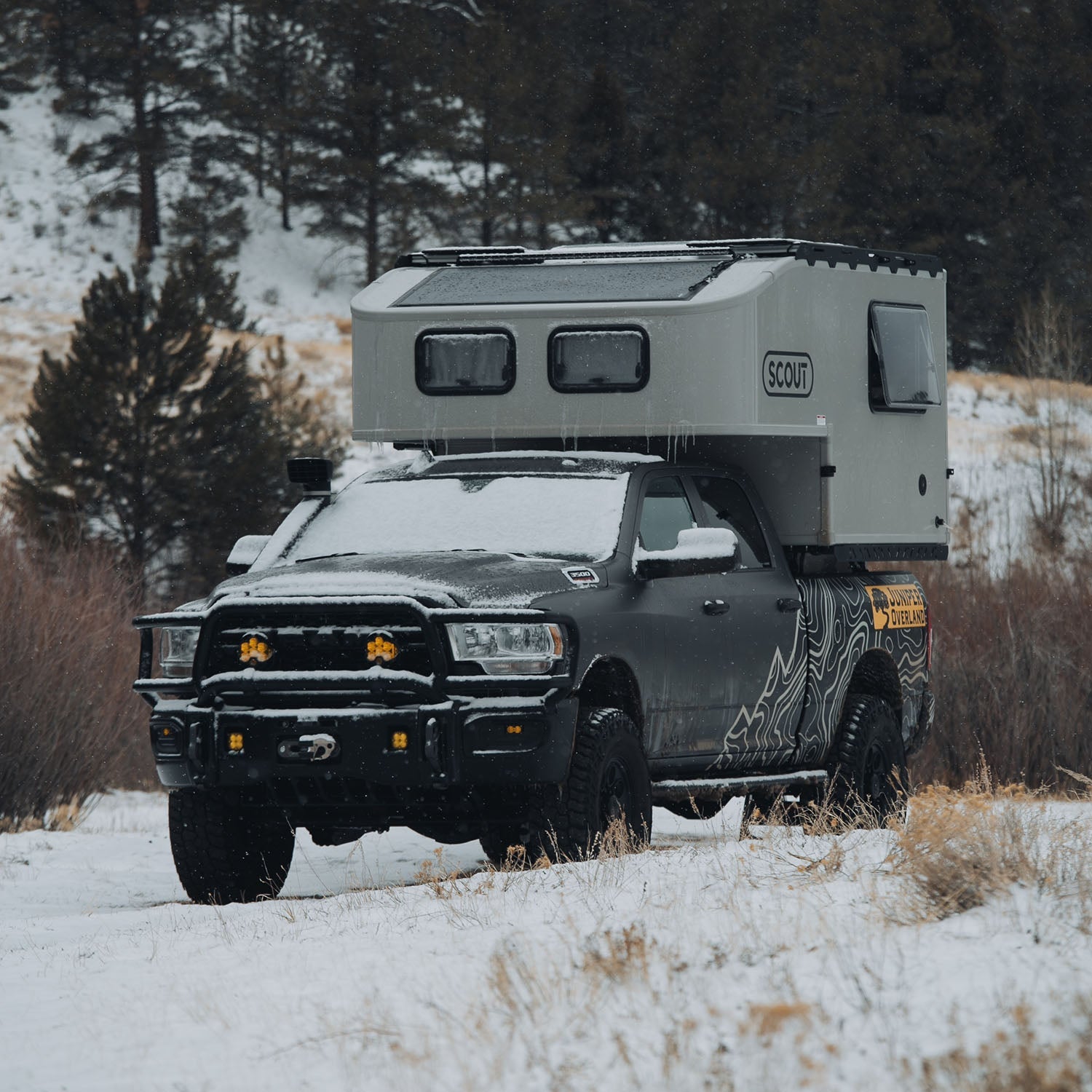
Scout Campers are built for four-season adventures, but even a camper designed for year-round use needs proper care when temperatures drop below freezing. Whether you're putting your truck camper away for the winter or preparing for an extended period without use, taking a few steps now can help prevent damage and keep your camper ready for your next trip.
Proper Scout Camper winterization helps protect the water system, electrical components, accessories, and interior from potential cold-weather damage.
This guide covers general winterization and long-term storage recommendations for Scout Campers, including the Scout Yoho, Olympic, Kenai, and Tuktut models. Some steps may vary depending on your camper's model, production year, and installed options.

One of the most important steps in winterizing a Scout Camper is removing standing water before freezing temperatures arrive.
Many Scout Camper configurations use a portable water storage system rather than a conventional onboard freshwater plumbing system. While this simplifies winter preparation, any remaining water in the sink, drainage system, or accessories can still freeze and cause damage.
Scout Camper water system winterization checklist:
Remove the LifeSaver Jerry Can from the camper.
Empty any standing water from the sink and allow the sink drain to drain completely.
Disconnect and drain any optional shower hoses or water accessories.
Check the exterior drain outlet to ensure water is not trapped.
Remove any additional portable water containers and drain them before storage.
The LifeSaver water filtration system requires special attention during winter storage. Freezing can damage the filter membrane and compromise its ability to safely filter water.
Follow the LifeSaver manufacturer's storage instructions. Do not allow a previously used filter cartridge to dry out. The unit should be stored in a protected, temperature-controlled environment where it cannot freeze.
Refer to the LifeSaver Jerry Can owner's manual for proper cleaning and long-term storage instructions. A previously used filter should be kept hydrated according to LifeSaver's guidance, even though the rest of your camper's water system should be drained.
Before storing your Scout Camper for the winter, thoroughly clean and dry the interior. Food, moisture, and damp materials left inside for several months can contribute to unpleasant odors, mold, and other storage-related problems.
Interior winter storage checklist:
Remove all food, beverages, and perishable items.
Empty and clean the refrigerator.
Leave the refrigerator door slightly open while stored to prevent moisture and odors from accumulating.
Remove damp clothing, bedding, towels, and other moisture-holding materials.
Clean countertops, cabinetry, flooring, and other interior surfaces.
Make sure the interior is completely dry before closing the camper for storage.
Check storage compartments for items that could freeze, leak, or become damaged.
Keeping the interior clean and dry is especially important when storing your truck camper outdoors through the winter, where changing temperatures and humidity can contribute to condensation.
If your Scout Camper is equipped with a propane system, take the following precautions before placing it into long-term storage.
Propane winterization checklist:
Turn off all propane appliances.
Close the propane tank valve.
Disconnect or secure propane accessories according to their manufacturer's instructions.
Inspect the propane compartment and connections for any visible damage or concerns.
Important: Never leave propane appliances operating unattended during storage.

Proper battery storage is an important part of winterizing your Scout Camper, especially if it will sit unused for several weeks or months.
Cold temperatures can affect battery performance, and some lithium batteries have specific charging and storage requirements that must be followed to prevent damage.
Scout Camper electrical system winter storage checklist:
Turn off unnecessary electrical accessories and equipment.
Disconnect or shut down the electrical system according to the battery and power system manufacturer's instructions.
Check the battery manufacturer's recommendations for cold-weather storage and charging.
Plug the battery system into 110V shore power for charging when recommended and permitted by the battery and charging system manufacturers.
Do not charge a lithium battery when its cells are below the manufacturer's permitted charging temperature.
If equipped with a solar charging system, review the manufacturer's recommendations for winter storage and charging.
Battery storage and charging requirements vary by battery manufacturer and model. Some systems may be designed to remain connected to an approved charging source, while others require a specific storage charge level or electrical shutdown procedure.
If your Scout Camper has a lithium battery, pay particular attention to the manufacturer's minimum charging temperature. Cold-weather charging restrictions can apply to both shore power and solar charging systems.
Important: Always refer to your specific battery documentation before disconnecting, charging, or storing the electrical system. Do not assume that leaving the camper connected to shore power throughout winter is appropriate for every battery configuration.
If your Scout Camper is equipped with an optional diesel heater, proper shutdown and fuel preparation can help protect the heating system during extended winter storage.
Diesel heater winter storage checklist:
Turn the heater off and allow it to complete its normal shutdown and cooling cycle.
Do not disconnect power while the heater is still completing its shutdown cycle.
Check the heater manufacturer's recommendations for extended storage.
Add a four-season diesel additive when appropriate for the fuel and heater, following the manufacturers' instructions.
Ensure the heater intake and exhaust openings are free of debris and are not obstructed.
Before returning the camper to service, inspect the heater's intake and exhaust openings again to ensure they remain clear.
Winterizing your Scout Camper is not limited to the interior. Preparing the exterior helps protect seals, doors, rooftop accessories, and other components from prolonged exposure to snow, ice, and moisture.
Exterior and roof winter storage checklist:
Clean the exterior of the camper and remove accumulated dirt and debris.
Inspect exterior seals, windows, doors, and access panels for visible damage.
Ensure exterior openings and compartments are properly closed.
Remove standing water from exterior accessories and storage areas.
Allow awnings, rooftop tents, and other fabric accessories to dry completely before folding or storing them.
Check that all exterior accessories are secured for storage.
Avoid storing the camper with wet fabric, bedding, or other moisture-trapping materials. This is particularly important for rooftop tents, awnings, and soft goods that may remain folded for several months.
Whether you plan to leave your Scout Camper mounted on your truck or store it separately, the goal is to keep the camper protected, dry, and properly maintained until you're ready to use it again.
For extended winter storage, we recommend:
Parking the camper in a covered or protected area when possible.
Keeping the camper clean and dry.
Periodically checking the interior for moisture, condensation, or signs of water intrusion.
Maintaining the battery according to manufacturer recommendations.
Ensuring all doors, windows, vents, and compartments are properly secured.
Removing any items that could freeze, leak, or become damaged during storage.
Even after your camper has been winterized, occasional inspections throughout the storage period can help identify moisture or other concerns before they become more serious.
Scout Camper configurations vary by model, production year, and optional equipment. This guide is intended as a general winter storage reference and does not replace the original Scout owner's manual or individual component manufacturers' instructions.
If your camper is equipped with additional accessories, including a portable toilet, refrigerator, diesel heater, LifeSaver water filtration system, or other optional equipment, consult the respective manufacturer's instructions for additional winterization requirements.
Failure to properly prepare your camper for freezing temperatures may result in damage to equipment, accessories, or other components.
Preparing your Scout Camper for winter storage doesn't have to be complicated, but making sure everything is properly drained, cleaned, and protected is important.
If you have questions about winterizing your Scout Camper or would prefer to have Juniper Overland assist with preparing your camper for winter storage, contact our Service & Installation Center.
Our team can help you prepare your camper for the off-season so it's ready when your next adventure begins.

Nov 06, 2026

Oct 13, 2026

Oct 06, 2026
Get tips on overland travel and rig setup, exclusive deals on campers and gear, early access to events and product launches, and customer adventure stories.