
Living With a Sco...
Oct 13, 2026

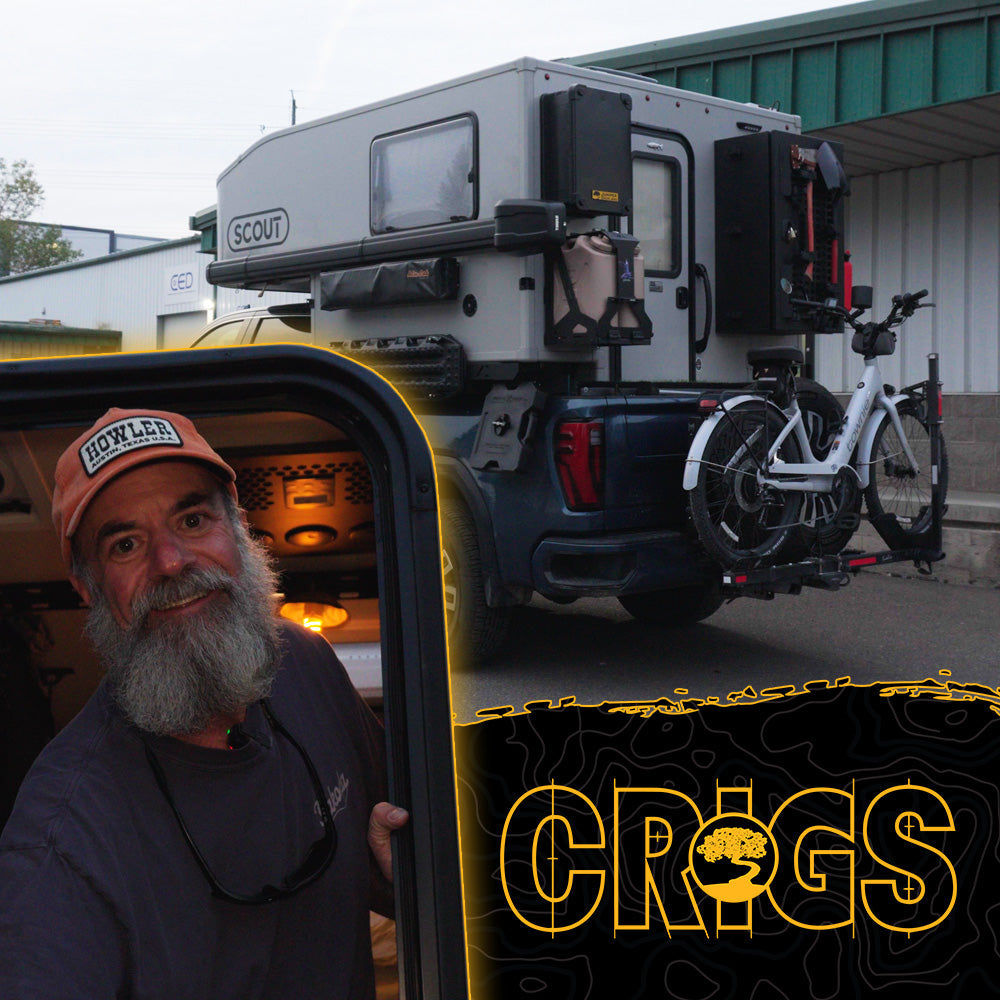
Earlier this year, Adam came to Juniper Overland with a clear goal for his Scout Olympic. He wanted a camper that could support extended fly fishing trips, remote work, four season travel, and long stretches away from home. After finding us through our YouTube walkthroughs, he traveled from North Carolina and trusted our team to build the foundation of that camper around the way he planned to use it.
A few months later, Adam was back at Juniper before leaving on a three month trip through the western United States. This time, the camper was no longer brand new. He had already lived with it, worked from it, fished from it, and learned which systems mattered most to him. That gave us the chance to see how the original build had evolved once real world use started shaping the decisions.
If you want the full technical breakdown of the original build, including the systems and upgrades we installed before delivery, you can read that article >>>here<<<.
One of the biggest changes Adam made was inside the camper. Because he works remotely while traveling, he needed a better way to store a laptop, keyboard, additional displays, and the rest of his work equipment without letting the dinette become permanent office storage. He added custom molle panels that give those items dedicated places to live while the truck is moving, then allow him to clear the living space quickly once the workday is over.
That is exactly the kind of refinement that makes a small camper work better over time. Storage capacity matters, but organization matters more. When every frequently used item has a predictable place, the camper is easier to live in and easier to reset at the end of the day. Adam took the same approach with baskets, hooks, and additional organization around the sink, using otherwise empty wall and shelf space without making the interior feel crowded.
He also added extra floor protection because fly fishing brings a lot of wet and dirty gear into the camper. Rather than constantly worrying about damaging the factory flooring, he created a surface that is easier to clean and easier to replace. That is a small change, but it reflects the way the camper is actually being used instead of trying to preserve it like a showroom model.
One of the more useful things about seeing Adam again was hearing which parts of the original build he now relies on the most.
Our Juniper Overland Scout Campers Kitchenette Water Tank Kit has become his primary interior water source. Adam told us he rarely uses the factory LifeSaver system because the built in tank and Dometic faucet handle his everyday needs so well.
That is exactly what we wanted the system to do. The value is not just carrying another 6.2 gallons of water. It is reducing the number of steps required to use that water. The tank stays installed in the kitchenette, fills externally, and works with the rechargeable faucet, so washing hands, cooking, cleaning dishes, or filling a bottle feels much closer to using a normal sink. On longer trips, removing little inconveniences like that has a bigger effect than adding another flashy accessory.
The power system has worked the same way. Adam has roof solar, a 300 watt portable solar blanket, shore power, and the 50 amp alternator charging system we installed through an Anderson connection. He has found that the solar system can bring the batteries back to full on a good day of direct sun, while alternator charging handles recovery whenever he is moving between locations.
That kind of redundancy is important on a three month trip. No single charging source works perfectly in every condition. Solar depends on sun, shore power depends on access to an outlet, and alternator charging depends on driving. Using all three means the camper is much less dependent on any one condition being perfect.
The biggest evolution outside the camper is how purpose built the storage has become.
The Roambuilt Trail Box we installed during the original build is now effectively Adam’s fishing locker. Waders, boots, rods, tackle, and other fishing equipment stay together outside the living space, where they are easy to reach and where wet gear does not become an interior problem.
That is exactly why exterior storage is so useful on a camper like this. The goal is not simply to add more cubic feet. It is to separate dirty, wet, or frequently accessed equipment from the living area. For Adam, that means he can stop near the river, open one box, get dressed, grab what he needs, and start fishing without unloading the camper.
The Thule RodVault plays into the same workflow. He keeps two fly rods loaded and ready, so a spontaneous fishing stop does not require assembling gear first. He can pull over, grab a rod, put on his waders, and get in the water.
That is a good example of how we think about useful upgrades. The best ones remove steps. They make the thing you bought the camper to do easier to start doing.
Adam also expanded the water system beyond what we originally built because he discovered how much he values a real hot shower while traveling.
The CampLux system we installed in the Zarges case is still a core part of the setup. It works with the external pump and Alu-Cab Shower Cube to create a complete hot shower system without turning the Scout into a conventional RV plumbing setup. Adam has since added a folding wooden shower floor, which keeps him off mud or dirt and makes the whole setup feel more complete.
More importantly, he added another 14 gallon water tank under the truck with a 12 volt pump. That extra capacity means he no longer has to think about every shower as water taken away from cooking or drinking.
That is a meaningful quality of life improvement for extended travel. Water capacity is always a balance between weight, space, and convenience. Adam’s solution makes sense because he has enough truck capacity and a clear reason for carrying the extra volume. He uses the camper for longer trips, he showers regularly, and he spends a lot of time around water where getting wet and muddy is part of the day.
He also added a small exterior gray water container connected to the sink drain. That gives him a simple way to collect water when draining directly onto the ground would be inappropriate, such as staying in a driveway, parking lot, or certain hosted camping locations.
Again, none of this is complicated for the sake of being complicated. It is simply adapting the camper to more situations.
Adam’s changes are not limited to the Scout itself.
He added a RIG'd swing out setup that allows him to carry the spare tire, another table, and an e-bike. The bike is especially useful for the way he fishes. Once the camper is set up, he does not always want to break camp just to move a few miles down the road. The bike lets him leave the truck and camper in place, carry his fishing gear, and access another stretch of water without packing everything back up.
That changes the way the entire rig functions. The truck gets him into the area, the Scout becomes the basecamp, and the bike handles shorter trips from there.
He has also added more exterior storage for recovery gear, a jack, and other equipment he wants available without filling the cab or camper. That became especially important as he prepared for three months on the road and needed to carry more than he would for a weekend trip.
Long term travel usually exposes storage problems quickly. Gear that is manageable for two nights becomes annoying when you are living around it for weeks. Moving recovery equipment and other rarely used items outside preserves the interior for the things he actually touches every day.
Before leaving for the three month trip, Adam made Denver his first stop.
He wanted us to go through the camper systems and confirm that everything was functioning properly before he committed to an extended stretch on the road. We completed that systems check and found everything working as intended.
He also wanted to improve the way the truck handled the loaded camper. As the build grew and he added more gear, water, recovery equipment, and long term travel supplies, he noticed some additional movement from the truck. After talking through it with Jen and Nate, we upgraded the suspension with Icon V.S. 2.0 HD Series shock absorbers and SumoSprings in the front and rear to better support the complete setup.
That is an important part of building a truck camper correctly. The camper and truck should not be treated as separate projects. As payload changes, suspension, tires, handling, braking, and charging all become part of the same system.
The goal is not simply to make the truck sit level. It is to make the entire rig predictable and comfortable when it is fully loaded the way the owner actually travels.
The biggest difference between the camper we delivered and the camper Adam brought back is not any single accessory.
It is that the entire rig now reflects his habits.
The storage is arranged around fishing.
The work equipment has dedicated space.
The shower has enough water behind it to be used without hesitation.
The bike supports the way he explores once camp is established.
The power system gives him multiple ways to stay charged.
The truck suspension now reflects the real weight of the finished travel setup.
That is what happens when a good camper build gets enough time in the real world.
We can build the foundation, integrate the major systems, and help solve the hard technical problems. Then the owner starts discovering the small details that make the camper truly theirs.
Adam originally came to us because he wanted a Scout Olympic capable of supporting the way he wanted to travel. A few months later, he is taking that same camper on a three month trip through the western United States, fishing along the way and living out of the rig full time.
That is a pretty good test of whether the original idea worked.
There is no single correct way to build a Scout Camper.
A fly fisherman traveling for months needs something different from a family camping on weekends. Someone working remotely needs different storage and power priorities than someone using the camper primarily for hunting, skiing, or shorter trips.
That is why we start with how you want to use the camper.
From the camper itself to power, water, heating, storage, suspension, and recovery equipment, we can help build the complete rig around the way you actually travel.
If you are considering a Scout Olympic, Scout Yoho, or another camper we carry, schedule a consultation with our team and tell us what you want the camper to do.
We will help you build around that.
READ THE ORIGINAL SCOUT OLYMPIC BUILD

Oct 13, 2026

Oct 06, 2026

Jul 29, 2026
Get tips on overland travel and rig setup, exclusive deals on campers and gear, early access to events and product launches, and customer adventure stories.